Genesis Deeper ⑨ The River That Flowed Out of Eden — Why does the Bible suddenly list river names and gold? (Genesis 2:8-14)
A series that takes the Bible stories we study together and looks at them one passage at a time, a little more closely. Images you are free to use in worship, class, and on social media are included.

Yahweh God planted a garden eastward, in Eden, and there he put the man whom he had formed. Out of the ground Yahweh God made every tree to grow that is pleasant to the sight, and good for food, including the tree of life in the middle of the garden and the tree of the knowledge of good and evil. A river went out of Eden to water the garden; and from there it was parted, and became the source of four rivers. The name of the first is Pishon: it flows through the whole land of Havilah, where there is gold; and the gold of that land is good. Bdellium and onyx stone are also there. The name of the second river is Gihon. It is the same river that flows through the whole land of Cush. The name of the third river is Hiddekel. This is the one which flows in front of Assyria. The fourth river is the Euphrates.
— Genesis 2:8–14 (World English Bible)
1. He made the man, and then he made the home

In the passage before this one, God formed a man out of the dust and breathed into his nostrils. The man opened his eyes. And then the very next verse says this.
“Yahweh God planted a garden eastward, in Eden, and there he put the man whom he had formed.” (verse 8)
The order is worth a second look. The man comes first; the garden comes after. And the man was not made inside the garden. He was made outside it and brought in. That is what “there he put the man” means.
The word behind “planted” is nata (נָטַע), an ordinary word for putting a seedling into the soil. It is a gardener’s word. Across the fifty chapters of Genesis this verb appears in only three places, and in the other two the subject is a human being. Noah plants a vineyard (9:20); Abraham plants a tamarisk tree (21:33). This is the one place in Genesis where God is the one planting.
Then in verse 9 the trees come up. They are pleasant to the sight and good for food. Good to look at and good to eat. Read as a scene in which God prepares a place for the man he has just made, none of this is hard to follow.
The trouble starts in the next verse.
2. Suddenly it reads like a travel guide
From verse 10 the texture of the writing changes completely.
A river appears, and then the rivers start getting names. Pishon, Gihon, Hiddekel, the Euphrates. Tucked between them are the land of Havilah where there is gold, the gold itself, bdellium, onyx stone, the land of Cush, and the front of Assyria.
Out of seven verses, five are place names and minerals. A book that was talking about dust and breath a moment ago suddenly reads like a gazetteer. Many readers find their pace drops right here.
And the names are not all unfamiliar. Two of the four are still on the map today. Hiddekel is the Tigris, and the Euphrates is the Euphrates. The other two, Pishon and Gihon, cannot be located.
So the conversation drifts naturally toward “then where exactly was Eden?” — and there it stalls. With only two of the four identifiable, no map can be drawn. The five verses end up being read without anything to hold on to.
3. A little deeper · this list is not a map

Read verse 10 once more, this time following only the direction the water moves.
“A river went out of Eden to water the garden; and from there it was parted, and became the source of four rivers.”
The river does not flow into Eden. It goes out of it. The order on the page is this.
① The river goes out of Eden → ② it waters the garden → ③ from there it is parted → ④ it becomes four.
That is the opposite of the rivers we know. Ordinarily many streams gather into one and run to the sea. This river starts as one and opens into four. It is not a picture of water collecting. It is a picture of water spreading out.
So why are the four names there at all? The moment a river is named, that water becomes water in the reader’s own world. For the people who first received Genesis, the Tigris and the Euphrates were not legendary places. They were real rivers that carried boats and watered fields. So what this list says is less “here is where Eden was” and closer to “the water you know comes from there.”
The gold and the stones run the same way. Verse 12 says “the gold of that land is good.” That word “good” is tov (טוֹב) — the very word God says over what he has made all through Genesis 1. It is not decoration. It means there is good in the land this river passes through, and it quietly says where that good is connected back to.
So it comes out like this. The river of Eden is not a river that flows into Eden but a river that flows out of it. The first place God gave to a human being was not a place where water collects, but a place where water begins.
And that loosens what was stuck in section 2. These five verses were not written to tell us where it was. They were written to tell us how far it reached. Even if Pishon and Gihon are never located, nothing the passage set out to say is lost.
4. Words · plant · go out · source · water

① planted — nata (נָטַע); the form in verse 8 is wayyitta (וַיִּטַּע). It means to plant. Not to build, not to construct, but the thing a gardener does. Whoever plants a tree stays near it while it grows.
② went out — yotse (יֹצֵא), the participle of yatsa (יָצָא), ‘to go out.’ A Hebrew participle pictures a state still going on rather than a single finished act. It is closer to “is going out” than to “went out.” The river of verse 10 is not a river standing still.
③ source — the word is rosh (רֹאשׁ), ‘head.’ Verse 10 uses the plural rashim (רָאשִׁים) and says “four heads.” A head is what you call the point where a river begins, and this plural form occurs only here in Genesis. It does not mean four gathered into one. It means four beginnings came out of one.
④ to water — hishqah (הִשְׁקָה); the form in verse 10 is lehashqot (לְהַשְׁקוֹת). It means to give water, to give something to drink. And the same verb has already appeared four verses earlier. “A mist went up from the earth, and watered the whole surface of the ground” (verse 6). Where no rain fell and a mist barely damped the ground, now a river runs. The same word used twice shows how far the water situation has moved.
5. Long afterward, one man remembers this garden
The word for ‘garden’ appears fourteen times in Genesis. Thirteen of them are in chapters 2 and 3 — inside the Eden story.
The remaining one is 13:10, on the day Abram and Lot parted ways.
“Lot lifted up his eyes, and saw all the plain of the Jordan, that it was well-watered everywhere … like the garden of Yahweh, like the land of Egypt…”
What Lot saw was not trees and not fruit. It was that the land was well-watered. And reaching for a name for what he was looking at, he said it was like the garden of Yahweh.
One more thing overlaps here. The phrase rendered “well-watered” comes in Hebrew from the same root as ‘to water’ in section 4. The mist of 2:6, the river of 2:10, and the Jordan plain of 13:10 are tied together by one word.
The only time Eden is called back as an image inside Genesis, the thing that came to mind was water. What we saw in section 3 is confirmed once more here. What made this garden memorable was not the gold and not the stones. It was the water going out.
6. For us today
When we receive something good, thinking first about how to keep it is not strange. The harder it was to get, the more that is true. It happens in churches too. Once a curriculum fits, once a team finally clicks, we want to hold it as ours.
But the first place God gave a human being was not a place to be held shut. The river ran through the middle of that garden and did not stay there. It watered the garden and then parted and went out in four directions.
Was the water leaving a loss to the garden? The text does not put it that way. If anything, the water going out was the sign of what kind of place that garden was.
The place where you are standing may be like that too. The class you were given, the material you made, the thing you spent years learning. If it is not ending with you but leaking out somewhere, that may not be a leak at all, but the reason the place was put there.
It may be worth bringing to mind, today, one thing in your hands and where it has been flowing.
“Yahweh God, you planted a garden in Eden with your own hand and sent a river through the middle of it. Let me remember that what you have given me was not given to be shut away. Do not let the good that has come to me stop in my hands, and let me leave to you how far it reaches. On the days my place looks small to me, let me believe that water can begin there. Amen.”
🕊 How to use this in ministry
Opening question
Ask first, “Where does river water come from, and where does it go?” Once answers like mountains and the sea have come in, read Genesis 2:10 together and ask only “where did this river come out of?” Let the children find and read “out of Eden” themselves.
Activity
Put up the image of the river splitting into four, then have them draw a garden in the middle of a large sheet and four channels running out from it. At the end of each channel have them write the name of a place they know. Home, school, grandmother’s house all work. When the drawings are done, show the image of the gold and stones on the riverbed and add, “the Bible wrote down that there is good in the land this river passes through.”
Application
Put up the wide image of the garden and ask only “what if this river had just stayed inside the garden?” Do not settle the answer for them.
🖼️ Today’s four images · press and hold or right-click to save
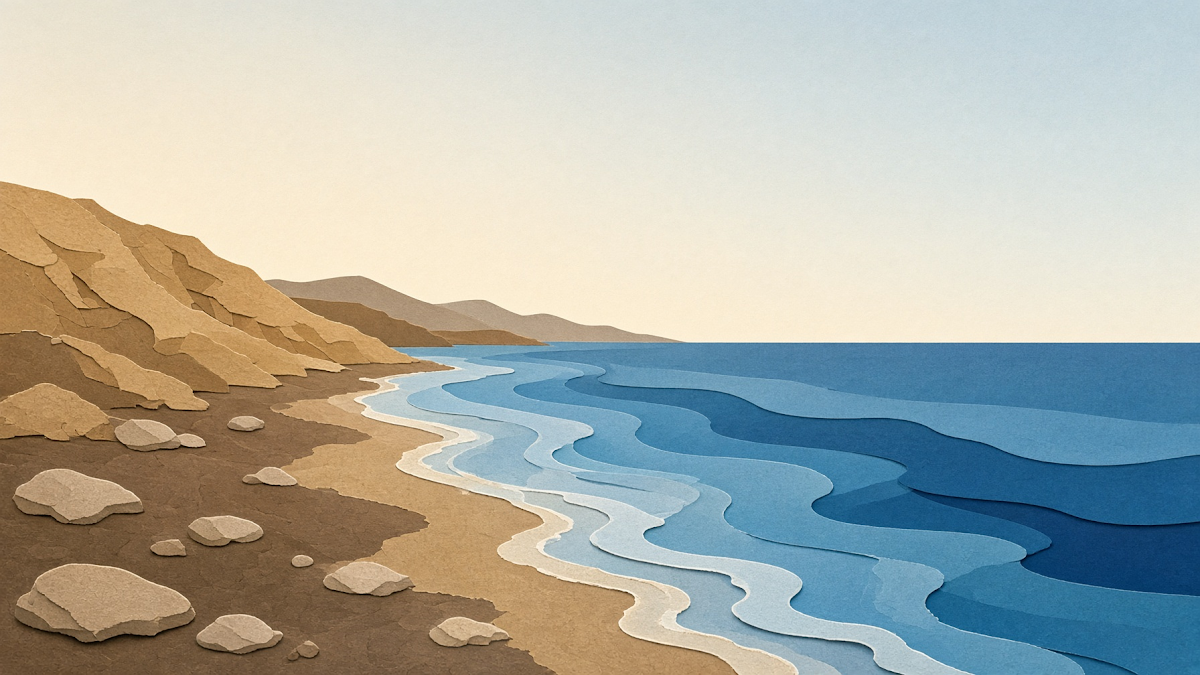
The river through the middle of the garden |
The garden God planted himself |
From one into four |
The good in the land the river passes |
📄 Image license CC0 (public domain) · free to use, modify, and redistribute with no attribution required.
🤖 These images were created with AI (Grok).
🎨 28 free Creation images — transparent PNG · CC0, from the first day to the seventh
🇰🇷 한국어 · 🇺🇸 English (current) · 🇰🇭 ភាសាខ្មែរ
Origin Bible · Mission Zedero
Contact joypej@gmail.com
✍️ This article was written with the help of AI and reviewed by a human.
The text is CC BY-NC 4.0 — free for non-commercial use with attribution.


댓글
댓글 쓰기